The 15 Most Beautiful Lakes in Austria for 2026 (with Insider Tips)
Austria actually has thousands of lakes, ranging from small standing waters and crystal-clear mountain water to warm swimming lakes. Lake Klopein (Klopeiner See) in southern Carinthia heats up to 28 degrees Celsius in summer, making it the warmest swimming lake in Europe.
In this article, we present the 15 best lakes in Austria (subjectively, of course), from famous highlights to hidden insider tips. We also provide a practical “Lakes in Austria Map” for better orientation. These beautiful lakes in Austria offer something for everyone, whether you want to swim, hike, or enjoy water sports.
Key Takeaways
With its lakes, Austria offers an incredible variety for every taste—from warm swimming lakes to crystal-clear mountain lakes.
• Lake Klopein is Europe’s warmest swimming lake at up to 29°C and offers drinking water quality
• Carinthia is perfect for road trips (or cycling trips) between several lakes in short distances
• The Salzkammergut combines UNESCO World Heritage with spectacular nature experiences
• Arriving early at popular destinations like Hallstatt helps avoid tourist crowds
• June to August are ideal for swimming; May and September are perfect for hiking
The best strategy is to choose a region and combine several lakes within it. With the right planning and early booking, you will experience unforgettable moments in Austria’s most beautiful natural paradises.
Achensee – The Tyrolean Sea
Location and Arrival at Achensee
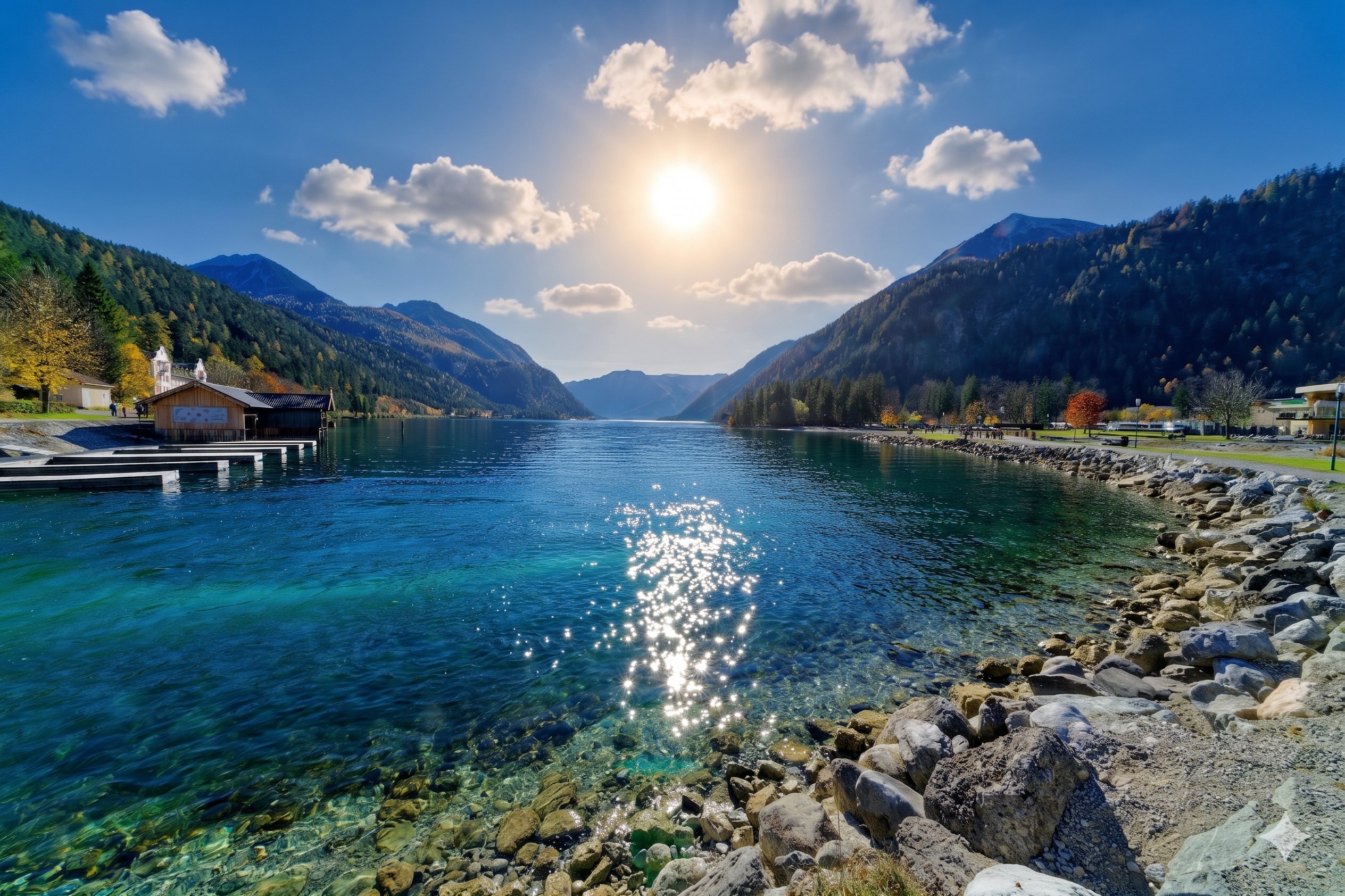
Lake Achen (Achensee) is located at an altitude of 929 meters between the Karwendel Mountains and the Rofan Mountains in North Tyrol. At 9 kilometers long and up to 133 meters deep, it is Tyrol’s largest lake. Getting there is easy. Jenbach serves as the central transport hub and is only 25 minutes by bus from the lake. The Railjet from Vienna stops here up to eight times a day. As a guest of the holiday region, you travel completely free of charge by public bus from Jenbach station to Achensee. Your accommodation booking confirmation serves as your ticket.
Special Features of Achensee
The crystal-clear water reaches temperatures between 20 and 22 degrees in summer. The water quality is equivalent to drinking water, and visibility reaches up to 10 meters below the surface. Particularly fascinating: In winter, the water level drops by up to five meters(!). The Achensee power plant uses 38 million cubic meters of water as storage volume and generates 219 gigawatt-hours of electrical energy per year.
Activities at Achensee
Water sports are very popular here. Light winds in the morning and stronger winds in the afternoon create ideal conditions for sailing and surfing. Paragliding offers spectacular views of the turquoise-blue lake nestled between the mountains. Hikers can explore around 500 kilometers of marked trails in the Karwendel Nature Park and the Rofan Mountains. The Achensee shipping service connects all major towns on the lake in a hop-on/hop-off style.
Insider Tip for Achensee
The Dalfaz Alm at 1,693 meters offers homemade cakes and a fantastic view of the lake. The Dalfaz Waterfall plunges over 60 meters and is particularly impressive after the snow melts in early summer.
Attersee – Austria’s Largest Inland Lake
Location and Arrival at Attersee
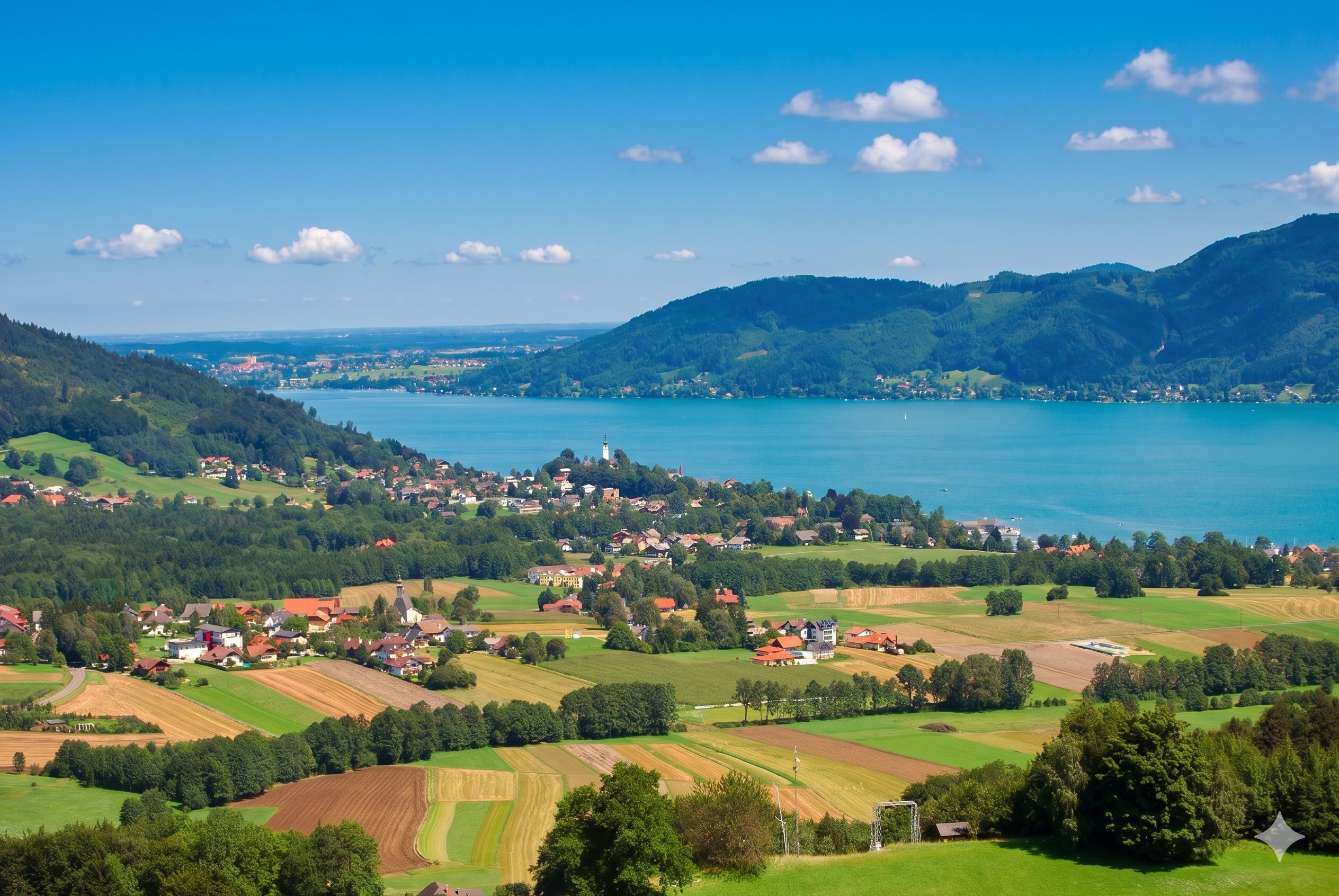
With an area of 46.2 km², Lake Atter (Attersee) is the largest inland lake entirely located on Austrian territory. It stretches across the Upper Austrian Salzkammergut between the towns of Schörfling and Unterach at an altitude of 469 meters. The West Autobahn A1 runs directly along the lake with exits at Schörfling, Seewalchen, and St. Georgen.
Arrival by train works via Vöcklamarkt. From there, the narrow-gauge Attersee Railway runs to the town of Attersee. There is also a standard-gauge branch line from Vöcklabruck to Kammer am Attersee. The distance from Vienna is 250 kilometers, and only 55 kilometers from Salzburg.
Special Features of Attersee
The turquoise water has drinking water quality. Visibility is up to 25 meters, and it can be even better in the winter months. With a depth of 169 meters, Attersee is the second deepest lake in Austria after Traunsee.
The legendary “Rosenwind” makes it a paradise for sailors. During stable fair weather, a steady breeze is created by the mountain massif located to the south. The Union Yacht Club Attersee was founded back in 1886 and is one of the oldest sailing clubs in Austria.
Activities at Attersee
Stand-up paddling, sailing, windsurfing, and kitesurfing are among the most popular water sports. Several sailing schools offer courses and boat rentals for beginners. The clear water attracts divers, with the visibility and underwater cliffs on the eastern shore offering special nature experiences. For fishing, you need a valid fishing card, available at tourist offices or fishing shops.
Insider Tip for Attersee
The Alexenau swimming area between Weyregg and Steinbach shows the turquoise water at its best in the afternoon. The Huthausaufsatz natural bathing spot was recently expanded by the Federal Forests to 7,200 square meters.
Wörthersee – The Caribbean of the Alps
Location and Arrival at Wörthersee
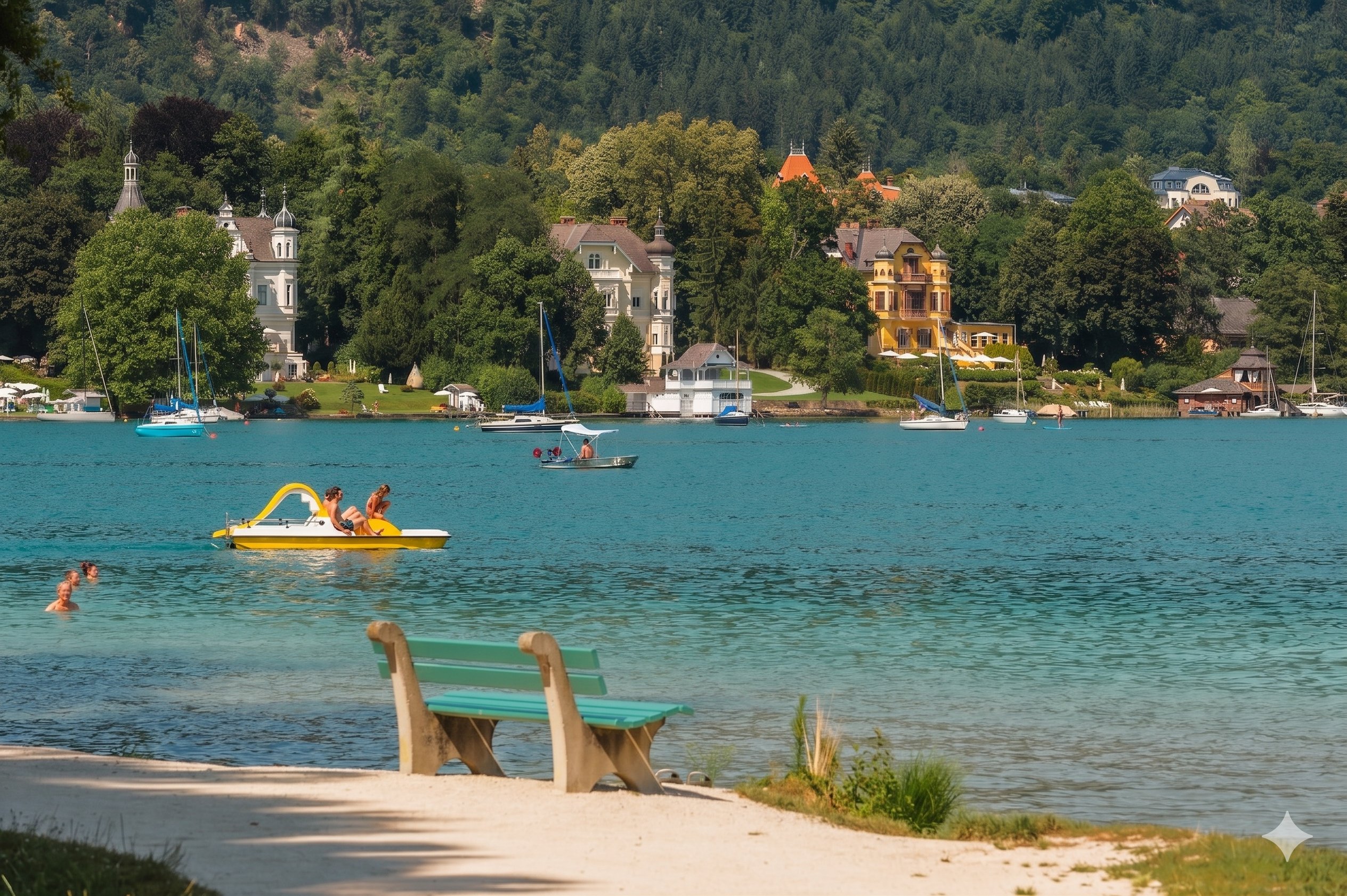
Carinthia’s largest lake stretches over 16 kilometers in length between Villach and Klagenfurt. Its area of 19.4 square kilometers is divided into three basins. Klagenfurt is only 4 kilometers to the east and is connected to the lake by the Lend Canal.
Arrival is easy via the A10 Tauern Autobahn and A2 South Autobahn. Starting March 2026, the WESTbahn will connect Vienna and Villach five times a day with a direct stop in Pörtschach; the travel time is only 3 hours and 23 minutes. Since the opening of the Koralm Railway, you can reach Wörthersee from Graz in just 42 minutes, with tickets starting at €8.99. Klagenfurt Airport is 20 kilometers away, or alternatively, Ljubljana is 87 kilometers away.
Special Features of Wörthersee
The turquoise-blue color is unmistakable. The water temperature reaches 22 to 27 degrees Celsius in summer, and the top layer of water down to eight meters heats up to over 25 degrees. Therefore, it is one of the warmest Alpine lakes. The Klagenfurt basin ensures an almost Mediterranean climate with 8 to 9 hours of sunshine daily in summer.
Activities at Wörthersee
The 40-kilometer bike path leads completely around the lake. Water sports are a must: sailing, windsurfing, water skiing, stand-up paddling, and parasailing. The Wörthersee fleet offers trips between Klagenfurt and Velden with the nostalgic ship Thalia or the electric-solar ship Maria Wörth. The Pyramidenkogel is the highest wooden observation tower in the world at 100 meters.
Insider Tip for Wörthersee
Krumpendorf on the north shore is more charming and less crowded than Velden or Pörtschach. The Parkbad stretches over 17,000 square meters and is the second-largest beach bath on Wörthersee. A floating library with over 1,500 books visits the various beach baths.
Wolfgangsee – Pearl of the Salzkammergut
Location and Arrival at Wolfgangsee
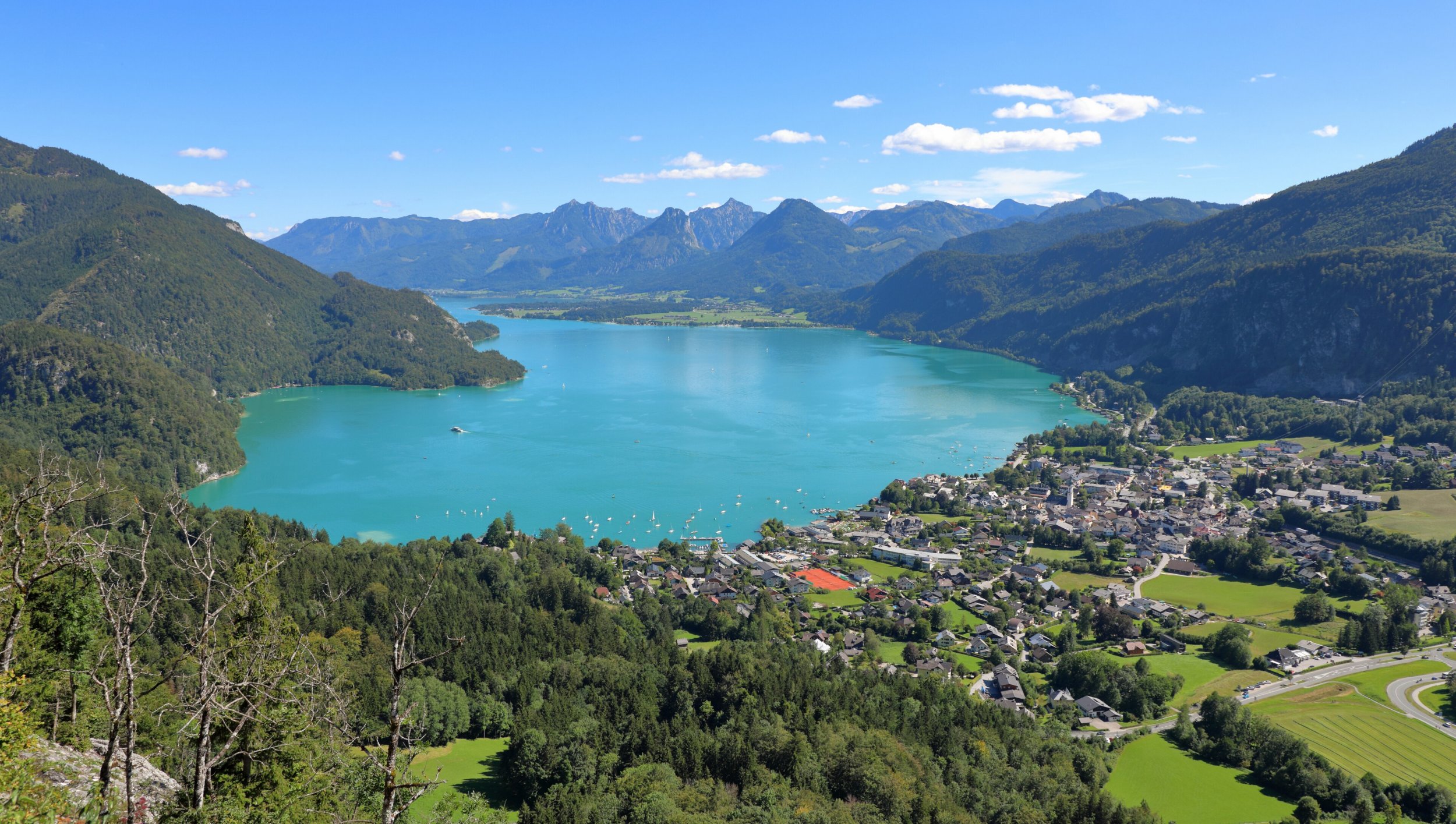
Three charming towns surround this lake: St. Wolfgang, St. Gilgen, and Strobl. Lake Wolfgang (Wolfgangsee) connects the federal states of Upper Austria and Salzburg. Nestled between the Schafberg in the west and the Zwölferhorn in the east, it lies in an idyllic alpine landscape.
By train, you travel via Salzburg Main Station or Bad Ischl Station. From both stations, bus line 150 takes you directly to the lake. You can reach St. Wolfgang with bus line 546 from Strobl bus station. By car, take the A1 exit Regau if coming from Vienna or Linz, or the exit Thalgau or Mondsee from Salzburg.
Special Features of Wolfgangsee
With its crystal-clear, turquoise water, Wolfgangsee is one of the cleanest lakes in Europe. Its original name was Abersee, documented as early as 800 AD. 500 years later, it was named after Saint Wolfgang, who made the town an important pilgrimage site of the Middle Ages. St. Wolfgang, along with Rome, Santiago, and Aachen, was considered the most significant pilgrimage center in the Christian West.
Activities at Wolfgangsee
The Schafberg Railway was put into operation in 1893 and is the steepest cog railway in Austria. The ride takes just over half an hour and covers 1,190 meters in elevation over 5.85 kilometers. From the summit of the 1,783-meter-high Schafberg, you can see seven lakes.
Wolfgangsee Shipping offers trips on the historic paddle steamer Kaiser Franz Josef I, which has been chugging across the lake since 1873. You can also enjoy sailing, surfing, diving, SUP, or water skiing.
Insider Tip for Wolfgangsee
The Wasswiese natural beach in Strobl offers a sunbathing lawn, jetty, and boat rental. The summer toboggan run in Gschwendt near Strobl has two tracks, each 1,300 meters long. The Lake Distillery in the old St. Wolfgang monastery cellar produces regional gin, with a specific variety dedicated to each Salzkammergut region.
Hallstätter See – UNESCO World Heritage Setting
Location and Arrival at Hallstätter See
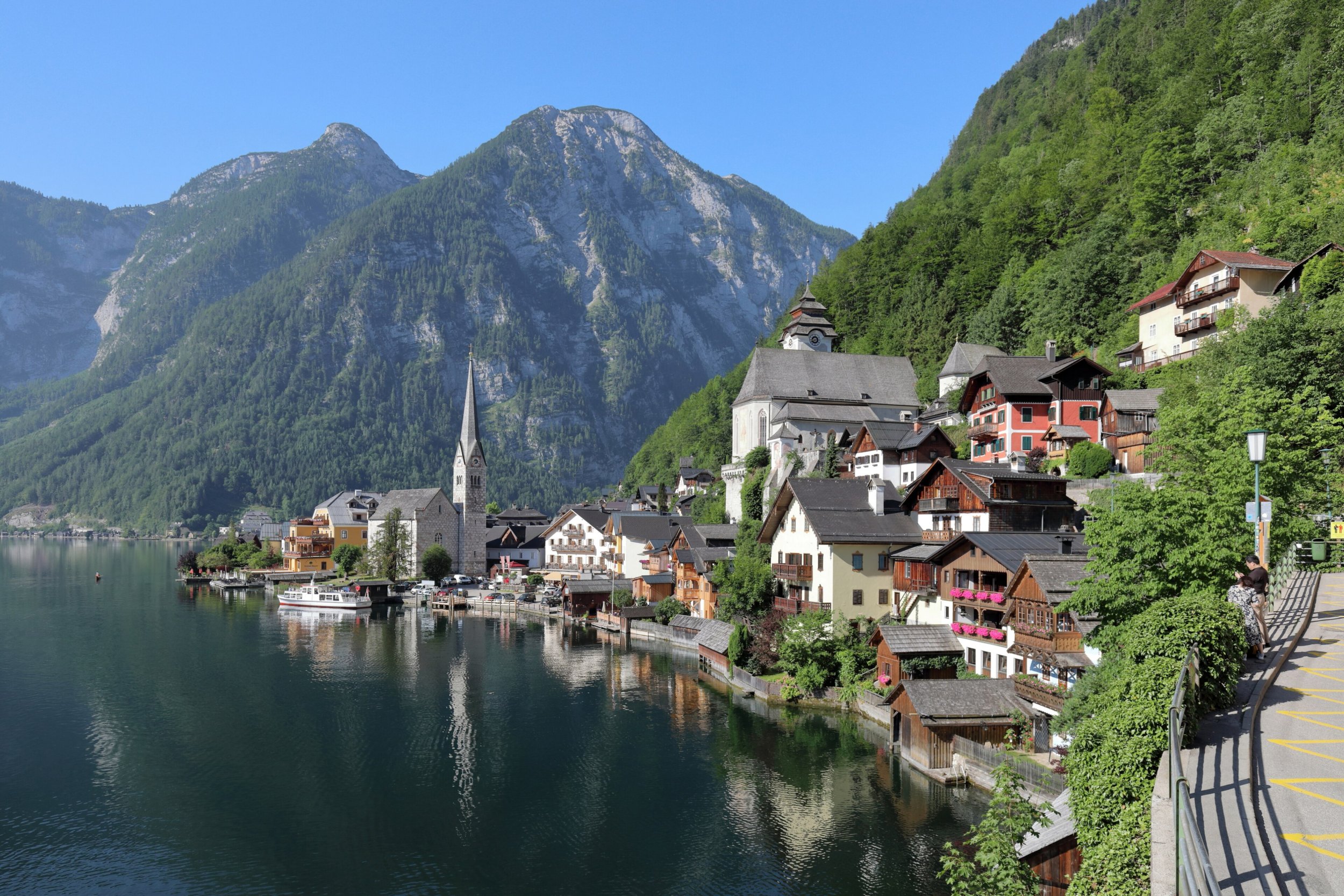
Since 1997, the Hallstatt-Dachstein/Salzkammergut region has been a UNESCO World Heritage site. Lake Hallstatt (Hallstätter See) lies at 508 meters altitude at the northern foot of the Dachstein massif. At 7.5 kilometers long and 1.4 kilometers wide, it stretches like a fjord between steep mountain walls. Its area is 8.55 square kilometers with a maximum depth of 125 meters.
From the north, you reach the lake via the A1 exit Regau, then through Gmunden and Bad Ischl. The travel time from Gmunden is about one hour. From Salzburg, it’s a 45-minute drive via the A10 exit Golling and the B166. A vignette is required for all motorways, available at petrol stations.
Hallstatt station is located on the eastern shore opposite the town center. The ferry Stefanie takes you from the station to the center year-round. You can easily take bicycles with you.
Special Features of Hallstätter See
UNESCO recognized the region as an exceptional natural landscape with early and continuous human activity. The lake connects the four towns of Hallstatt, Obertraun, Bad Goisern, and Gosau. The traditional “Zillen”—flat wooden boats similar to Venetian gondolas—are part of the intangible UNESCO cultural heritage. As early as the 13th century, these single-oar boats transported salt across the lake.
Activities at Hallstätter See
The shipping service offers two circular tours: the south route connects Hallstatt with Obertraun, and the north route leads to Untersee and Steeg. Boat trips with historic “Zillen” cost between 10 and 15 euros. Rowing, pedal, and electric boats are available starting at 10 euros for half an hour.
The 11-kilometer Ostuferweg (East Shore Path) on the sunny side of the lake is one of the most beautiful hiking trails in the Salzkammergut. Along the way, the Gasthaus Seeraunzn invites you for a break.
Insider Tip for Hallstätter See
Visit Hallstatt early in the morning at sunrise, when the town is in magical silence. The company Navia offers romantic “Zillen” trips at sunset or relaxed early morning trips on the water.
Weißensee – Nature Paradise in Carinthia
Location and Arrival at Weißensee
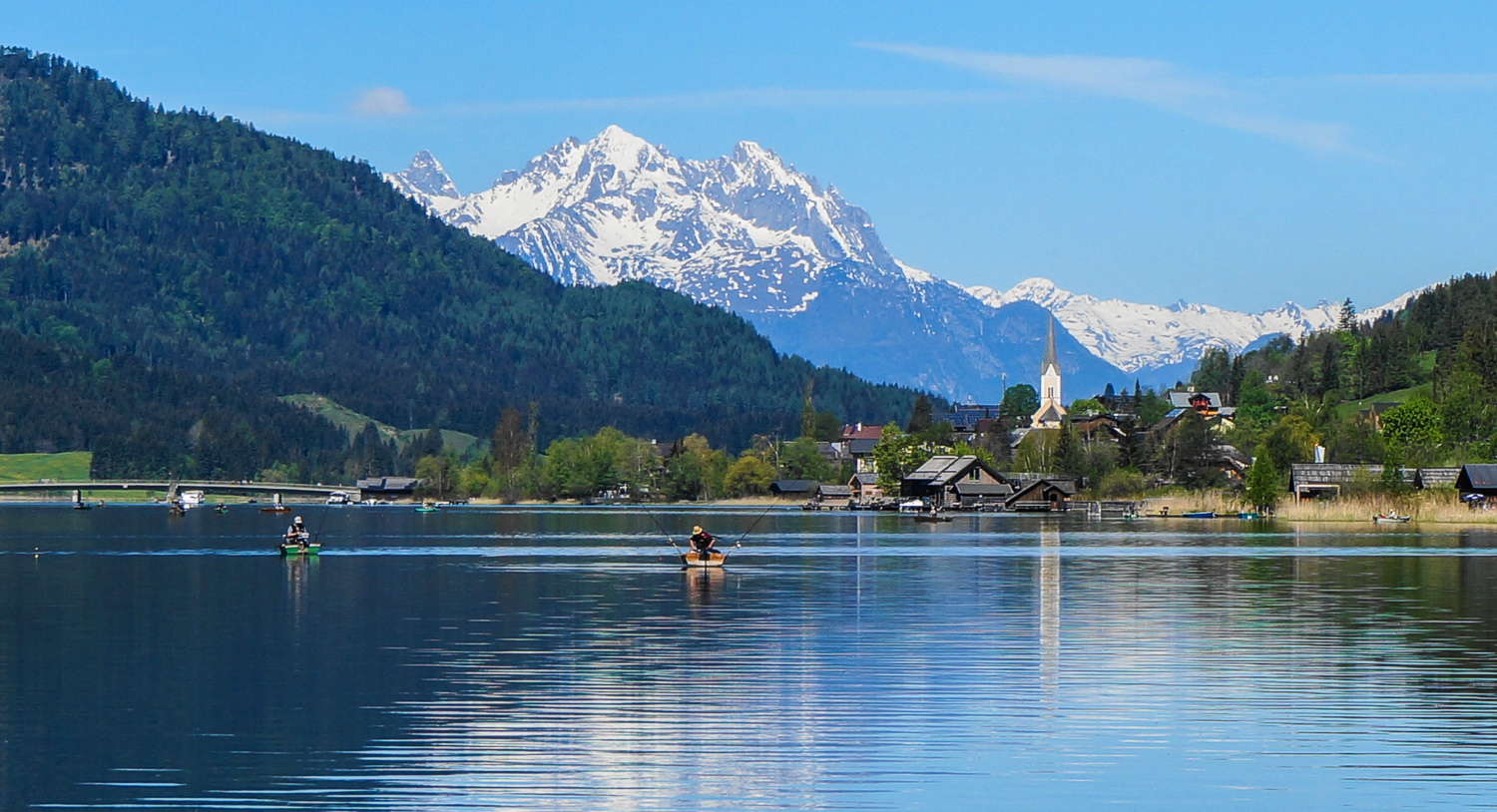
At 930 meters altitude, Carinthia’s highest swimming lake is nestled in the Gailtal Alps. The fjord-like lake stretches over 11.6 kilometers and reaches a depth of 99 meters at its deepest point. A 76-square-kilometer area around Lake Weissen (Weißensee) is under nature and landscape protection.
The journey leads through Greifenburg. From the north, take the Tauern Autobahn A10 to the Spittal interchange, then continue via Greifenburg to Weißensee. From the east, drive via the South Autobahn A2 to Villach, or alternatively, use the Hermagor/Gailtal exit. The nearest train station is in Greifenburg, from where a station shuttle takes you directly to your accommodation. Klagenfurt Airport is 120 kilometers away.
Special Features of Weißensee
The water is of drinking quality, making Weißensee Europe’s most natural alpine lake. Visibility reaches up to 6 meters. Combustion engines are permitted only for public shipping, water police, and agriculture. This results in exceptional peace and quiet on the water.
The western part shimmer in rich emerald green, while the eastern part glows in various shades of turquoise. The name comes from white limestone deposits on the shore, washed in from the surrounding mountains. In summer, the water warms up to 24 degrees.
Activities at Weißensee
The Weißensee shipping service operates from early May to late October and connects eight stations. In winter, the lake freezes over completely, forming Europe’s largest prepared natural ice surface with 6.5 square kilometers. Around 200 kilometers of hiking trails lead through the nature park, and 100 kilometers of mountain bike trails offer various levels of difficulty.
Insider Tip for Weißensee
The Kohlröslhütte at 1,540 meters can only be reached on foot in about 1.5 hours from the mountain station. The shore hiking trail starts at the Dolomitenblick and leads through completely undeveloped areas along the turquoise-blue shore.
Millstätter See – The Enchanting One
Location and Arrival at Millstätter See
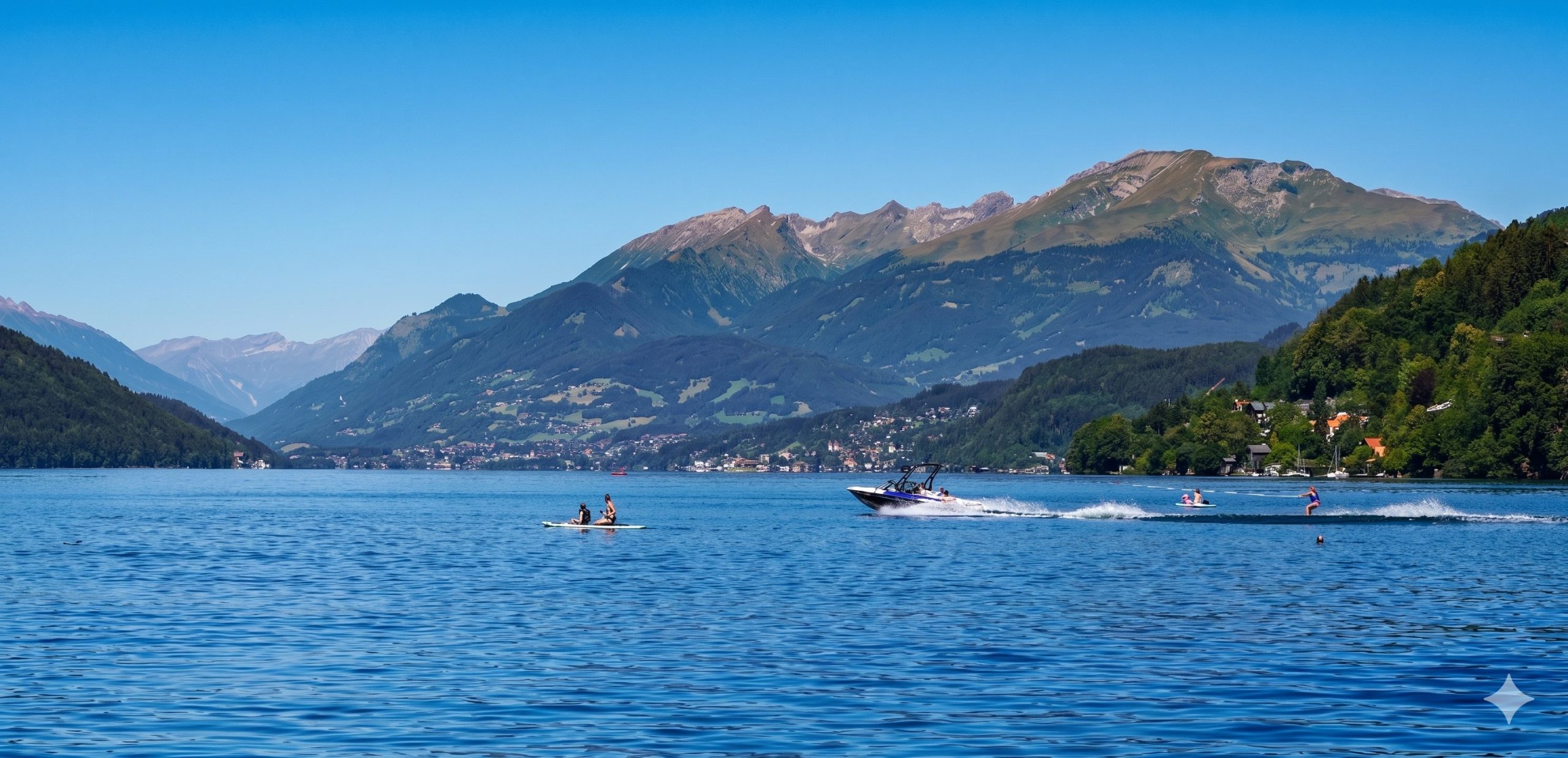
North of the Drau Valley and surrounded by mountains over 2,000 meters high, this enchanting lake lies at 588 meters altitude. At 12 kilometers long and up to 1.8 kilometers wide, it is Carinthia’s second largest lake after Wörthersee. The largest towns—Seeboden, Millstatt, and Döbriach—are spread along the north shore.
From the north, take the Tauern Autobahn A10 from Munich via Salzburg towards Spittal an der Drau until the Millstätter See exit. From the east, the South Autobahn A2 leads from Vienna and Graz via Klagenfurt and Villach. From Italy, you reach the lake via the A2 from Udine. The federal railway’s Tauern motorail offers a traffic-free alternative through the Tauern Tunnel between Böckstein and Mallnitz.
Special Features of Millstätter See
With a depth of 141 meters and a water volume of 1,204.5 million cubic meters, it is Carinthia’s most water-rich lake. The water is of drinking quality. The large amount of water and few inflows/outflows ensure that the lake warms up to 26 degrees in summer, with peak values even reaching 28 degrees.
Activities at Millstätter See
Water sports are a top priority: sailing, surfing, rowing, swimming, diving, water skiing, and stand-up paddling. The 28-kilometer bike path leads directly along the shore. Hikers can explore 14 tours with lake views in the certified hiking villages of Millstatt, Seeboden, and Döbriach. The shipping service connects all major stations around the lake.
Insider Tip for Millstätter See
The viewpoint in Gschriet near Ferndorf offers a magnificent panoramic view over the entire lake and the mountains. Villa Verdin in Millstatt serves organic coffee in bean bags directly by the lake. The Kleinsasserhof near Spittal combines food, drink, and art.
Zeller See – Salzburg’s Jewel
Location and Arrival at Zeller See
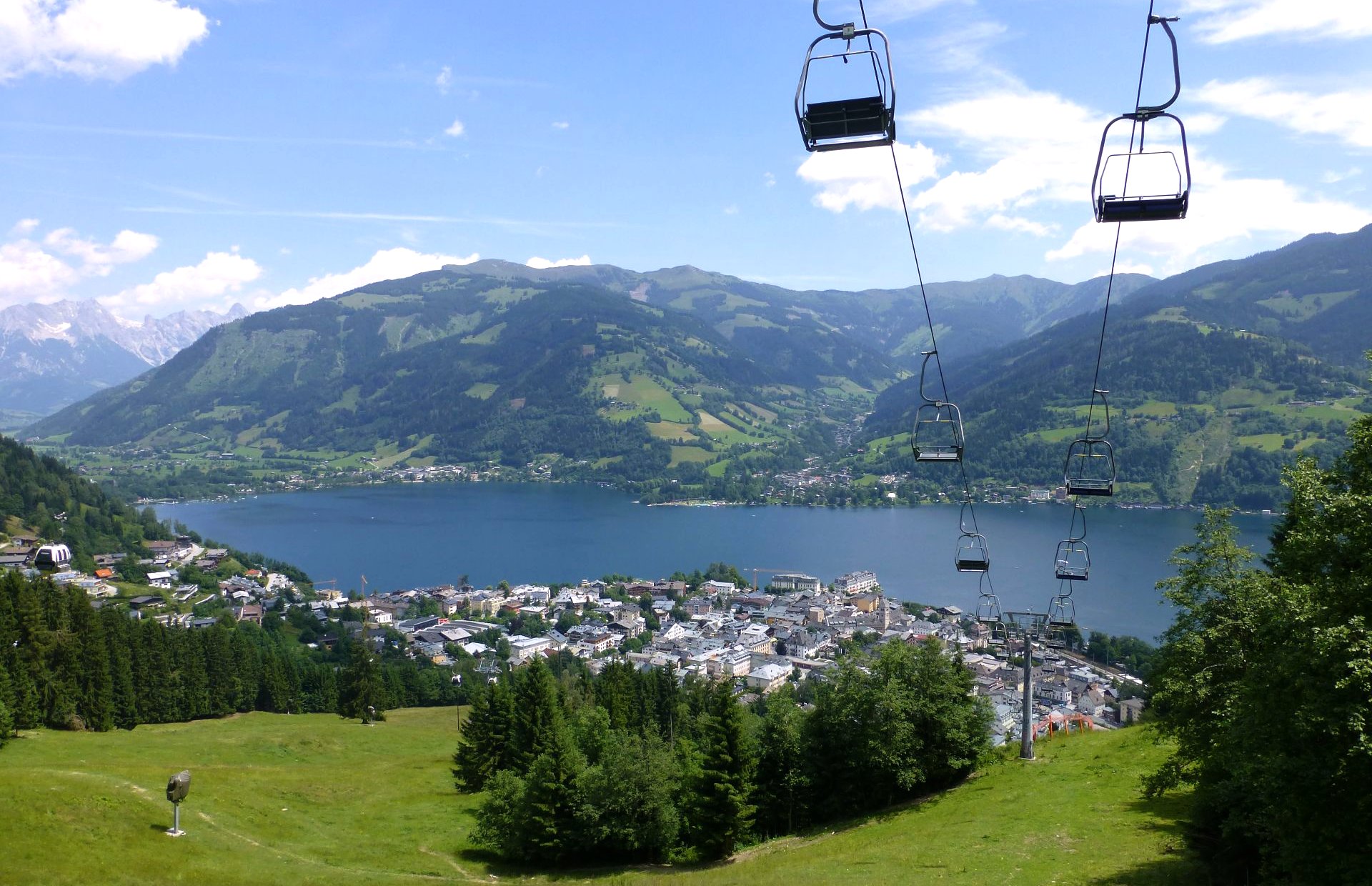
Guarded by majestic peaks, Zell am See is located directly on the shore of Lake Zell (Zeller See). The train takes you directly to the center of Zell am See. On foot, you are immediately in the thick of things.
From Vienna, take the B 227, A1 via St. Pölten and Salzburg, then the A8 and B 312 via the Steinpass to Zell am See. From Munich, drive via the A8, Traunstein, and Siegsdorf. Salzburg Airport is only 80 kilometers away. You can reach us directly by shuttle or taxi.
As an overnight guest, you receive the Guest Mobility Ticket. This allows you to use all public transport in the entire province of Salzburg free of charge.
Special Features of Zeller See
At 3.8 kilometers long and 1.5 kilometers wide, Zeller See is one of the most beautiful lakes in Austria. Its area of 455 hectares makes it the fourth largest lake in the province of Salzburg. The crystal-clear water is of drinking quality and reaches a pleasant 23 degrees in summer. On hot days, it even climbs to 24 degrees.
The depth of up to 70 meters provides refreshing cooling. The clear visibility and abundance of fish make the lake an Eldorado for divers and anglers.
Activities at Zeller See
Three beach baths welcome you: Zell am See, Thumersbach, and Schüttdorf. All of them feature diving towers, slides, water trampolines, and children’s playgrounds. In addition, you will find free bathing areas at the north shore (Wieshof) and the south shore (Erlberg).
Four ships are available for panoramic tours, including the nostalgic ship Libelle. Water sports such as stand-up paddling, surfing, sailing, and water skiing are available here.
Insider Tip for Zeller See
The Plettsaukopf reservoir reflects the mighty Kitzsteinhorn and the surrounding mountains in its crystal-clear water. From the Schmittenhöhe at nearly 2,000 meters altitude, you can see more than 30 peaks over three thousand meters with a 360° panorama.
Mondsee – Film Set and Swimming Paradise
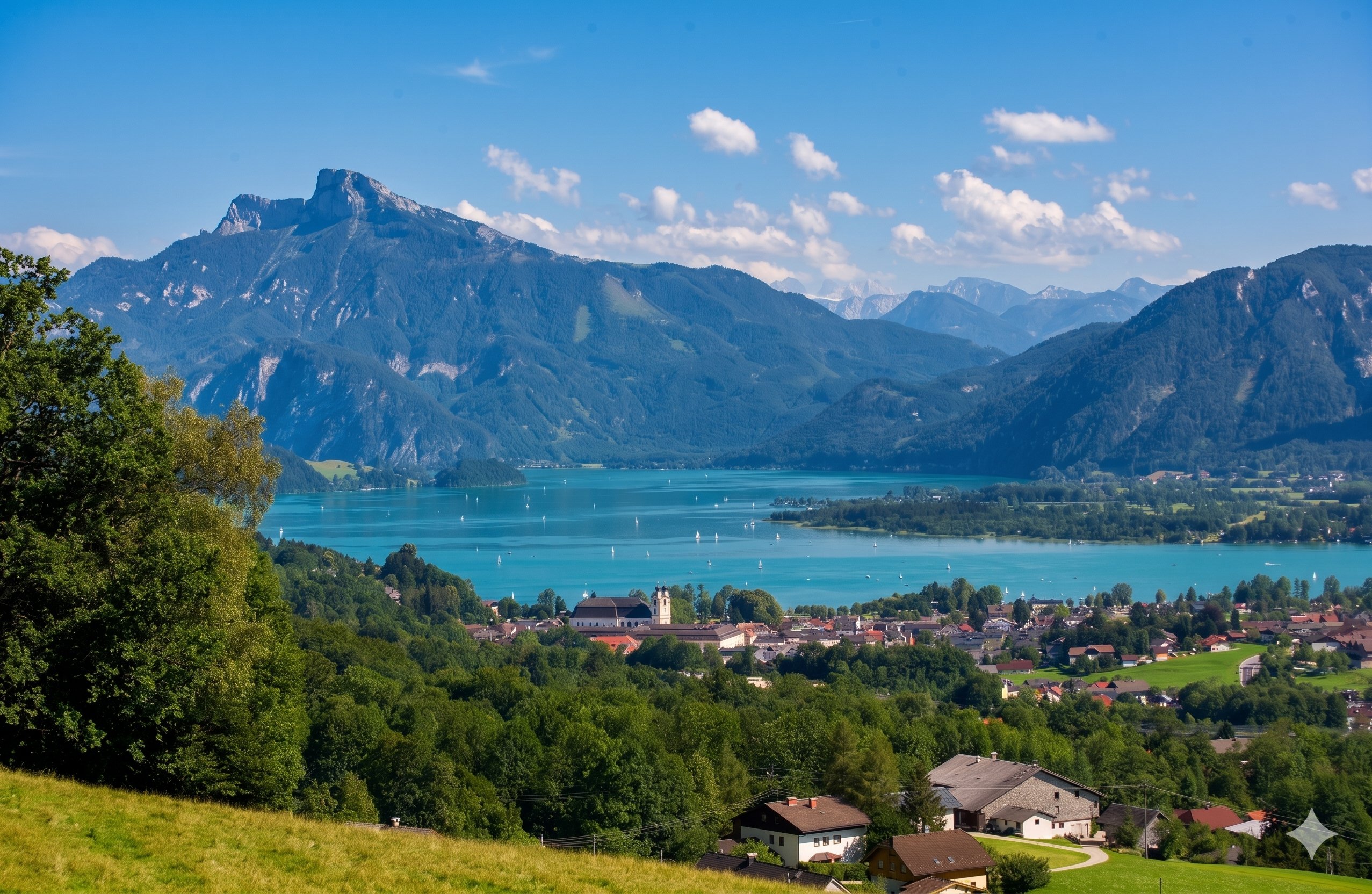
Location and Arrival at Mondsee
The famous basilica from the movie The Sound of Music made this lake world-famous. Lake Mond (Mondsee) is located in the Salzburg Salzkammergut, only an hour by bus from the City of Mozart. Bus line 140 takes you directly here from Salzburg Main Station; the journey takes about an hour. By car, take the A1 West Autobahn and the Mondsee exit.
Special Features of Mondsee
The wedding scene in the Hollywood film was shot in the imposing Mondsee Basilica. More than 50 years after the film’s premiere, thousands of people still visit the famous wedding church every year. As with most lakes in Austria, the water is of drinking quality and warms up to 27 degrees in summer, making it one of the warmest swimming lakes in Austria.
Activities at Mondsee
The Alpine Beach Bath features a diving tower, sandy beach, water slides, and beach volleyball courts. Three public bathing areas are available: Schwarzindien, Loibichl, and Plomberg. On the lake, you can go sailing, kayaking, water skiing, and diving. The shipping service offers circular tours with magnificent views of the surrounding mountains.
Insider Tip for Mondsee
The neighboring Irrsee is completely under nature protection and offers rowing boat tours with wooden boats.
Ossiacher See in Carinthia
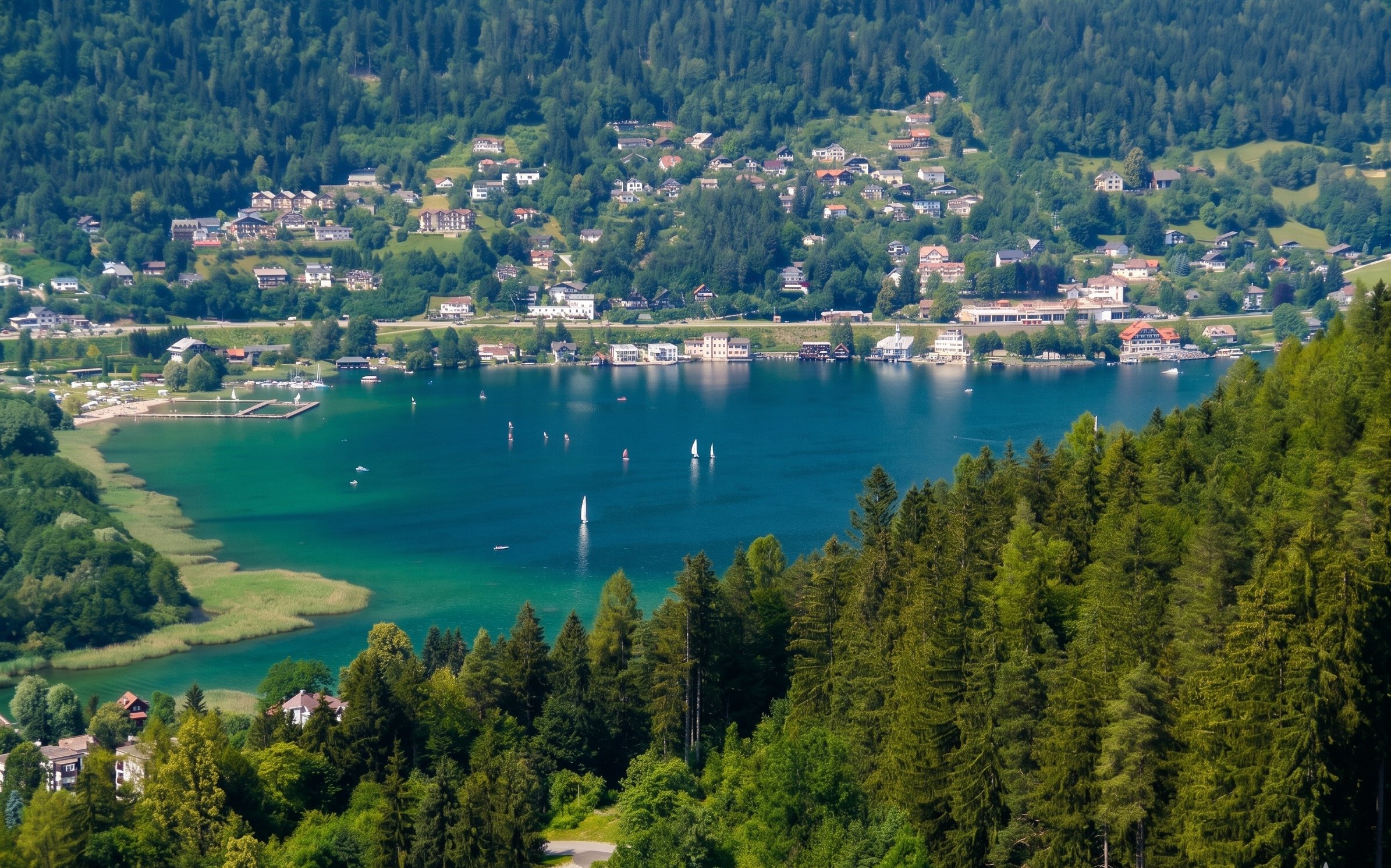
Location and Arrival at Ossiacher See
As Carinthia’s third largest lake, Lake Ossiach (Ossiacher See) lies northeast of Villach. Its area is 10.79 km², with a length of 11 kilometers and a shore length of 25 kilometers. From the Villach motorway junction, take the Villach-Ossiacher See exit. The Tauern Autobahn A10 leads directly to the region. Villach Main Station is the nearest train station, from where buses and trains run to the north shore.
Special Features of Ossiacher See
The water reaches up to 27 degrees in summer and is of drinking quality. The lake consists of two basins: the eastern one with a depth of 11 meters and the western one with a depth of 52 meters. Visibility for diving is 5 to 8 meters, and the lake is divable year-round. Night dives are permitted without a permit.
Activities at Ossiacher See
Diving is the focus here. The “Tauchschule Kärnten Pazifik” in Sattendorf offers courses for beginners and professionals. From the Gerlitzenbad, you can reach a pile dwelling and sunken Christmas trees as dive spots. You can also enjoy sailing, surfing, kayaking, and SUP. The 28.6-kilometer bike path with only 85 meters of elevation gain is perfect for families.
Insider Tip for Ossiacher See
Kathrin’s Buschenschenke is hidden high above the lake. With a cold platter (Brettljause) and homemade juices, you enjoy the best far-reaching view over Lake Ossiach.
Faaker See – The Turquoise One
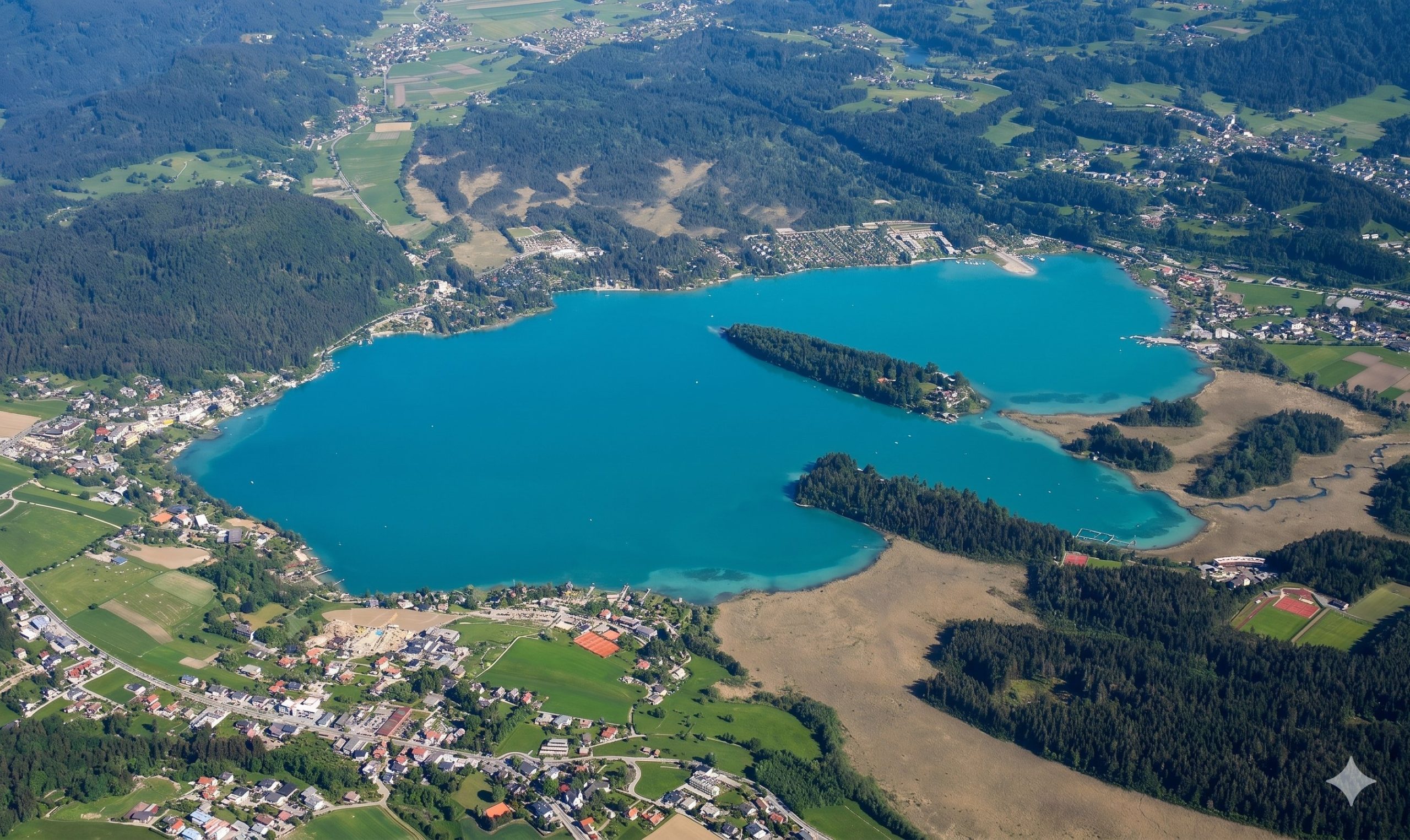
Location and Arrival at Faaker See
In the border triangle between Austria, Italy, and Slovenia, the country’s southernmost swimming lake shimmers turquoise blue below the striking Mittagskogel mountain. You reach the Villach region via the A10 Tauern Autobahn or A11; both directions lead to the St. Niklas exit. Villach Main Station is only 7 kilometers away, and Klagenfurt Airport is about 40 kilometers.
Special Features of Faaker See
Fine limestone particles from the Worounitza stream give the water its unique turquoise-blue color. The purity often exceeds drinking water standards and it warms up to 27 degrees. With an average of 300 days of sunshine a year, the region is considered a perfect place for sunseekers. The lake carries the title of “Cleanest swimming lake in the Alpine region.”
Activities at Faaker See
Private motorboats are prohibited, making the lake particularly suitable for gentle water sports such as SUP, kayaking, sailing, and swimming. The Kanzianiberg is one of Carinthia’s largest climbing areas. Families can explore the “Fuchsfährte” and “Woroun auf der Spur” adventure trails in Drobollach. The Lake.bike trail center at the Baumgartnerhof offers mountain bike tracks.
Insider Tip for Faaker See
The 1.5-kilometer-long reed meander in the west was named Carinthia’s most beautiful spot in 2019. The Panorama Beach lido in Drobollach is free of charge and offers a water slide and spacious sunbathing areas.
Klopeiner See – Europe’s Warmest Swimming Lake
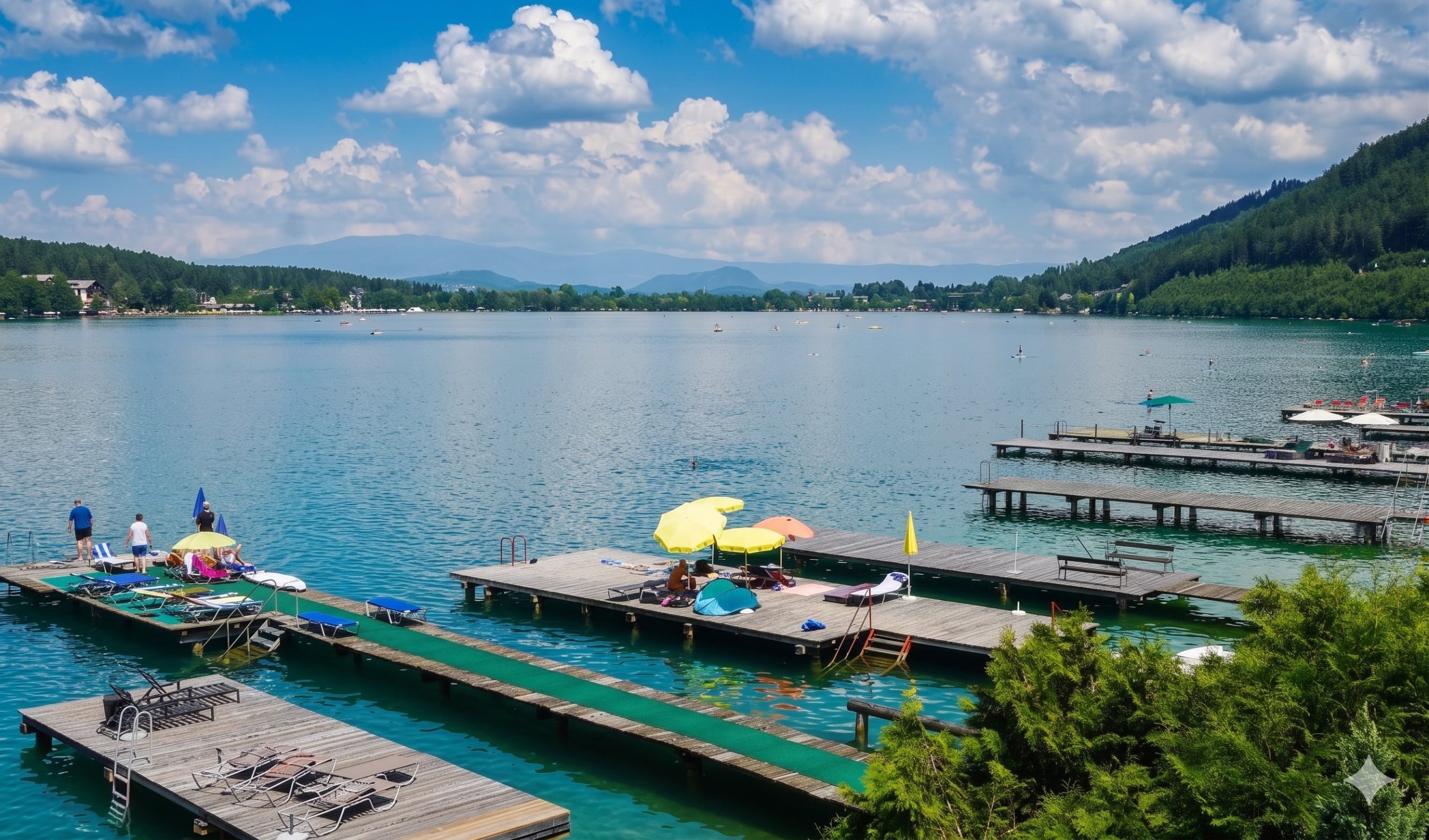
Location and Arrival at Klopeiner See
In Austria’s southernmost holiday region, southwest of Völkermarkt, one of the warmest swimming lakes in Europe awaits you. The region is home to a total of 7 swimming lakes. Lake Klopein (Klopeiner See) is only 20 kilometers from Klagenfurt Main Station.
Arrival by car is via the A2 with exits at Grafenstein, Völkermarkt West, Völkermarkt Ost, or Griffen. By ÖBB or Westbahn, you reach Kühnsdorf-Klopeiner See station in about 3 hours from Vienna and 33 minutes from Graz. The station shuttle takes you directly to your accommodation. Regional buses run to all communities, and the “Postbus Shuttle 4-Seen” operates between Klopeiner See, Turnersee, Gösselsdorfer See, and Kleinsee. As a guest, you receive the Aktiv Card for free S-Bahn travel throughout Carinthia.
Special Features of Klopeiner See
The water reaches up to 29°C in summer, making the lake the warmest swimming lake in Europe. The drinking water quality is exceptional. Klopeiner See is the only lake in Carinthia where the entire shore is publicly accessible. The continuous lake promenade extends over 5.3 kilometers and is unique in Austria. Motorboats are generally not allowed, except for water rescue.
Activities at Klopeiner See
The circular path around the lake takes about 1.5 hours and is perfect for a walk. Stand-up paddling, diving, surfing, canoeing, and pedal boating are among the most popular water sports. The Krainz beach bath on the east shore offers shallow, calm water for families. In total, 12 public bathing spots are available. The “Walderlebniswelt” in St. Kanzian covers 20,000 m² with a fox burrow, giant labyrinth, and slides. The Family Lake Festival takes place from May 23 to May 25, 2026.
Insider Tip for Klopeiner See
The nearby Turnersee is located in the middle of a nature reserve and is significantly quieter. The Gösselsdorfer See offers natural swimming experiences away from the main crowds. The Acoustic Lakeside Festival at Sonnegger See attracts over 3,000 visitors annually.
Traunsee – Austria’s Deepest Lake
Location and Arrival at Traunsee
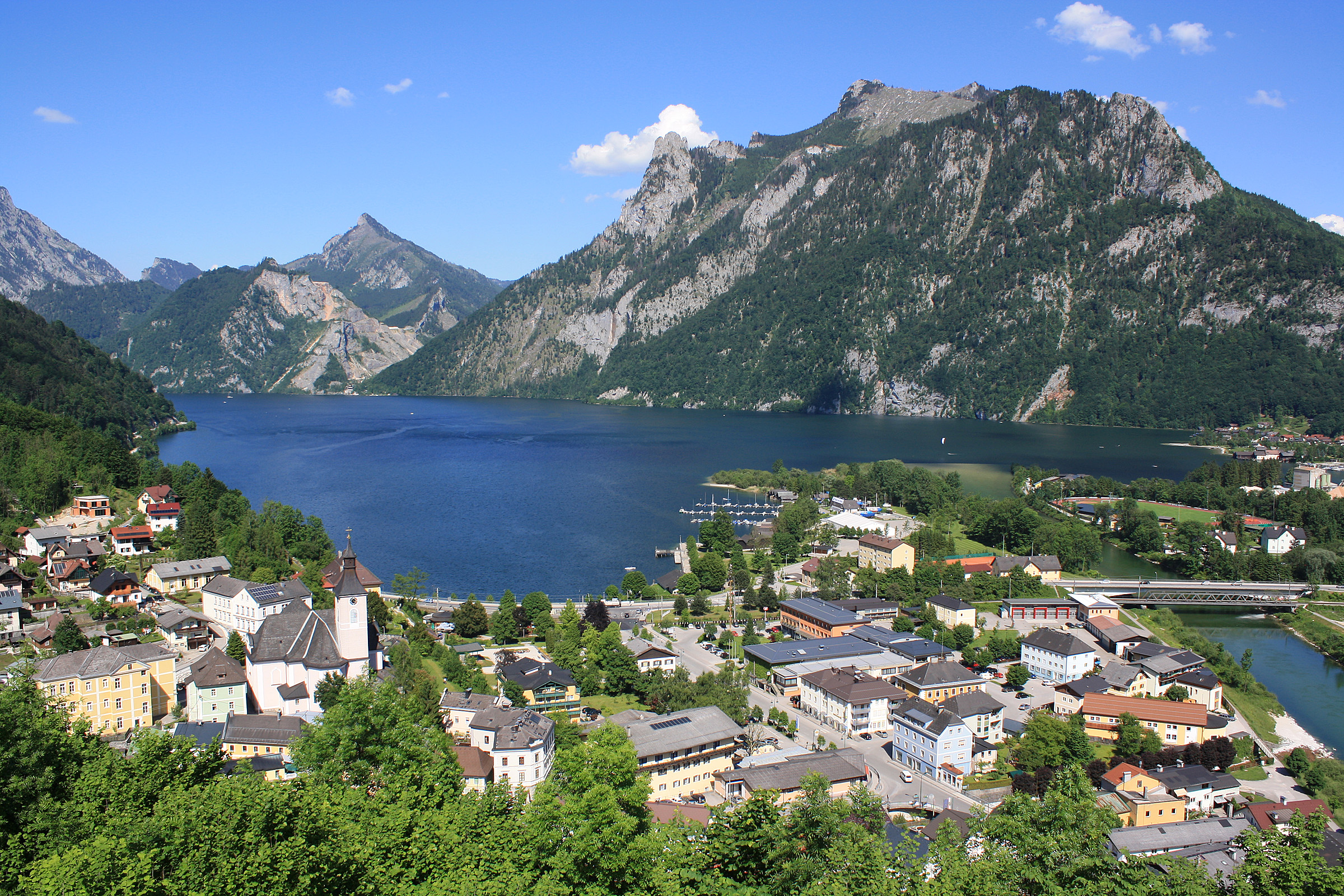
In the Upper Austrian Salzkammergut, Lake Traun (Traunsee) lies at 422 meters altitude on the northern edge of the Limestone Alps. The Traun river flows through it from Ebensee in the south to Gmunden in the north. The Salzkammergut highway runs directly along the west shore. The Salzkammergut railway runs largely parallel to it. From Gmunden, the Traunsteinstraße runs about 5 kilometers along the east shore.
Special Features of Traunsee
At 191 meters, it is the deepest lake in Austria. Its area is 24.35 km², and its water volume is 2.302 km³. The water shows a rich blue-green tone and has near drinking quality. Visibility reaches up to 10 meters below the surface. Schloss Ort, located on a small island, is one of the oldest buildings in the Salzkammergut.
Activities at Traunsee
No other lake in Austria offers such a wide range of water sports. Sailing, diving, water skiing, wakeboarding, surfing, and stand-up paddling are all possible. Thanks to challenging winds, it is considered a sailing paradise. The Traunstein mountain at 1,691 meters is suitable for demanding hikes.
Insider Tip for Traunsee
The Karbach peninsula in the south is a hidden paradise for quiet swimming days.
Grüner See – The Emerald Green Natural Wonder
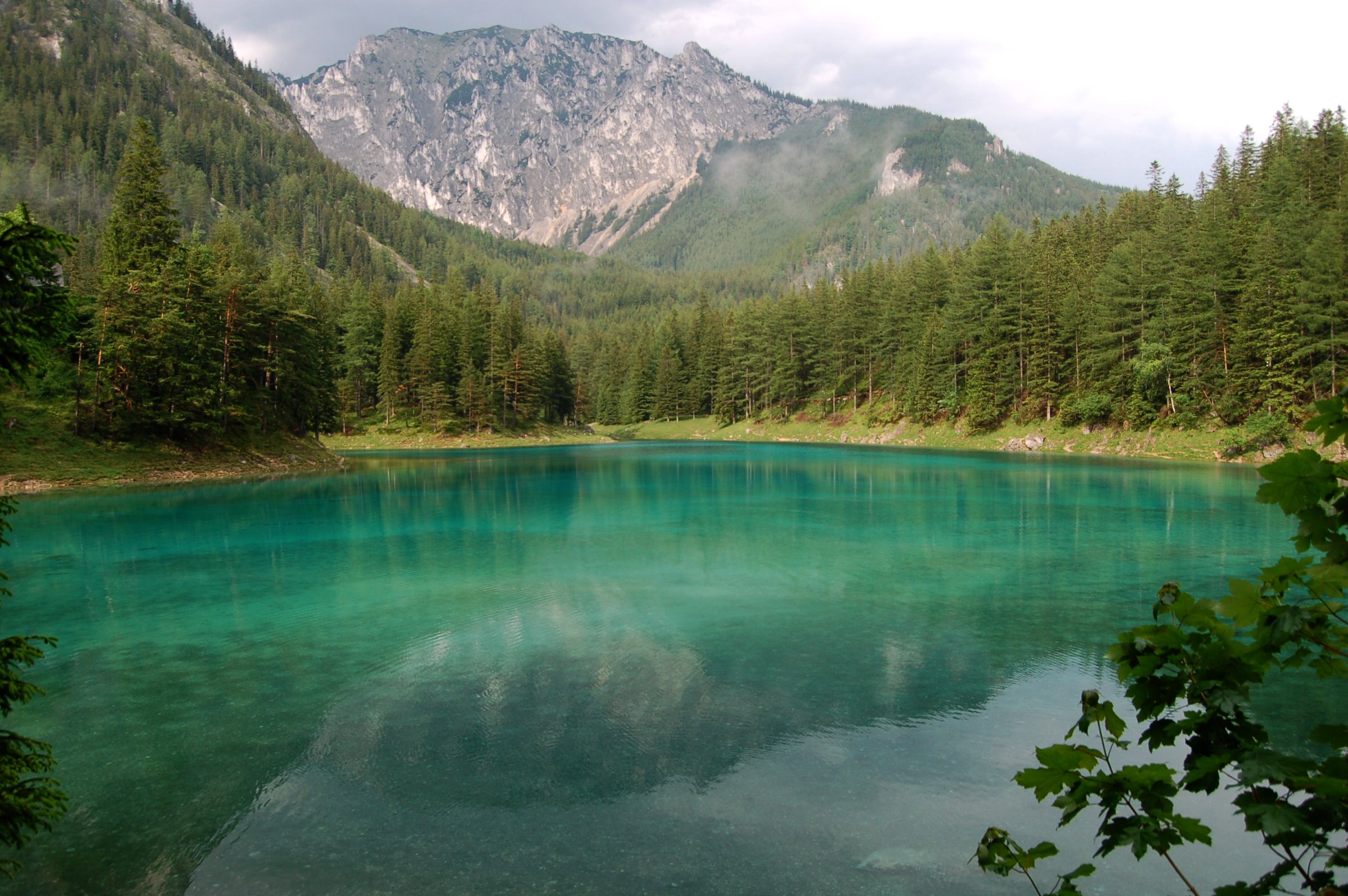
A lake that appears in spring and disappears in winter—Green Lake (Grüner See) is one of the most fascinating natural wonders among the beautiful lakes in Austria.
Location and Arrival at Grüner See
This karst lake is located in Tragöß-Sankt Katharein in Styria at 768 meters altitude. From Bruck an der Mur, bus line 175 takes you directly to the Grüner See car park. The parking fee is €6 for 24 hours. From the car park, you walk about 20 to 30 minutes to the lake.
Special Features of Grüner See
With the snow melt, the basin fills in spring with crystal-clear meltwater. The lake reaches its maximum depth in May and June with up to 10 meters. The emerald green color is caused by pure water and finely ground limestone. Visibility is up to 50 meters. In 2014, it was voted the most beautiful place in Austria. However, the lake dried up completely in April 2025 for the first time in 60 years.
Activities at Grüner See
The circular path around the lake takes about an hour. Diving and swimming have been prohibited since 2016 to protect the water quality.
Insider Tip for Grüner See
The Kreuzteich pond is only one kilometer away and reflects the Pribitz and Meßnerin mountains in its clear water.
Neusiedler See – Steppe Lake in Burgenland
Location and Arrival at Neusiedler See
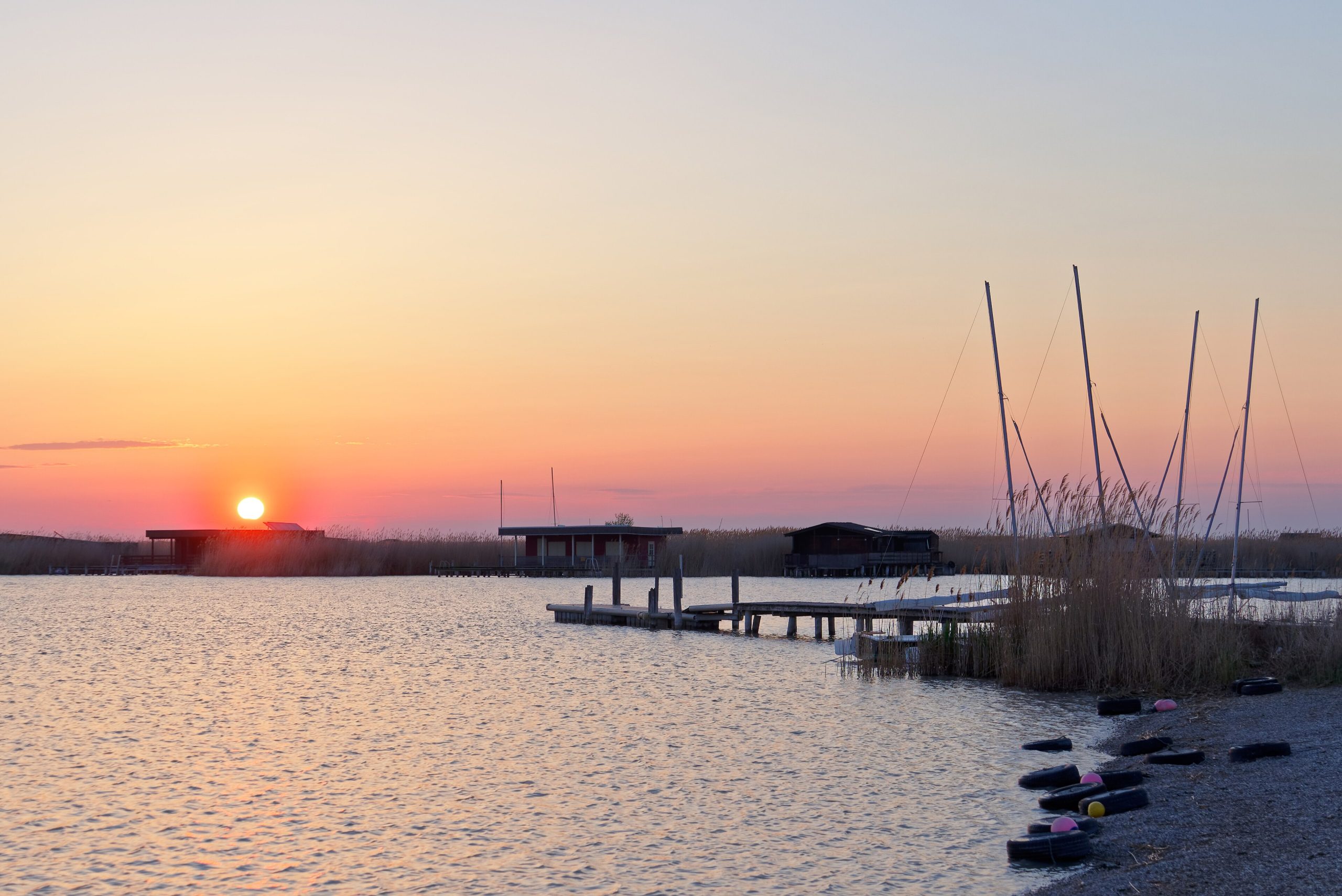
Europe’s largest steppe lake lies in the border area between Austria and Hungary. With an area of 315 km², it is one of the few steppe lakes in Europe. From Vienna, you reach Neusiedl am See in just 40 minutes with the ÖBB regional trains. The trains run half-hourly to hourly from Vienna Main Station. By car, the A4 leads directly into northern and central Burgenland via Vienna.
Special Features of Neusiedler See
The average depth is only 1 meter, with a maximum of 2 meters. This allows the water to warm up to 21 to 27 degrees. The vast reed belt covers 180 km² and is the second largest in Europe after the Danube Delta. Since 2001, the region has held UNESCO World Heritage status. With 300 days of sunshine a year, Burgenland is the warmest region in Austria.
Activities at Neusiedler See
Constant winds make the lake a paradise for sailors and windsurfers. The Neusiedler See-Seewinkel National Park is home to around 350 bird species. The unique salt pans provide a rare habitat for avocets and black-winged stilts. The 125-kilometer-long Neusiedler See cycle path encircles the entire lake.
Insider Tip for Neusiedler See
The “Hölle” preservation zone south of Podersdorf features grey geese and Mangalitza pigs. You can best explore hidden reed channels by e-boat early in the morning or before sunset.
Lakes in Austria Map – Overview and Planning Tips
*** soon availabe ***
Austria has a total of over 2,000 different lakes. Their distribution shows clear regional focal points that will make your route planning easier.
Carinthia leads with the highest density of lakes. Wörthersee, Faaker See, Weißensee, Millstätter See, and Ossiacher See are all close to each other. A road trip ideally starts in Klagenfurt and connects several lakes in just a few hours of driving. The Gerlitzen Alpe offers a breathtaking panoramic view of the Carinthian lake landscape.
The Salzkammergut is concentrated in Upper Austria and Salzburg. Here, Attersee, Traunsee, Wolfgangsee, Mondsee, and Hallstätter See are lined up together. The medieval adventure castle Hohenwerfen and the imperial city of Bad Ischl complement your lake tour. It is best to visit Hallstatt early in the morning to avoid the tourist hustle and bustle.
Tyrol scores with the Achensee as the largest lake in the region. You can reach it from Jenbach in three-quarters of an hour.
Burgenland offers a completely different experience with Lake Neusiedl. The shallow steppe lake is only 40 minutes from Vienna.
The best time for swimming lakes is June to August. For hiking and photography, May and September are particularly suitable.
Conclusion
Austria’s lakes offer you almost endless possibilities for your next holiday. The choice of the perfect lake depends on your preferences: Do you want to swim in the warm water of Lake Klopein, enjoy the turquoise Caribbean atmosphere at Lake Faak, or would you prefer the peace and quiet at the natural Lake Weissen?
It’s best to start with a region that particularly appeals to you. Carinthia is perfect for a road trip between several lakes, while the Salzkammergut combines cultural heritage with natural beauty. With the Lakes in Austria map, you can plan your route effortlessly.
Don’t forget to book your accommodation early, especially in the summer months of June, July, and August. Have fun exploring these natural paradises!
FAQs
Q1. Which lakes in Austria are considered special insider tips for beach holidaymakers?
Less well-known swimming lakes include Walchsee in Tyrol with water temperatures of up to 24 degrees, the natural Weißensee in Carinthia with drinking water quality, the Irrsee in Upper Austria under nature protection, and the Altausseer See in Styria. These lakes offer crystal-clear water and are significantly quieter than the famous tourist magnets.
Q2. Which Austrian lake is best for warm swimming water?
Lake Klopein (Klopeiner See) in southern Carinthia reaches temperatures of up to 29 degrees in summer and is considered the warmest swimming lake in Europe. Lake Wörthersee also warms up to 22-27 degrees, while Lake Mondsee, at up to 27 degrees, is also among the warmest swimming lakes in Austria.
Q3. Which lakes in Austria offer particularly clear water and drinking quality?
Lake Achen has near drinking quality with a visibility of up to 10 meters. Lake Atter reaches as much as 25 meters of visibility, while Lake Weissen stands out as Europe’s most natural alpine lake with drinking quality. Lake Faak also often exceeds drinking water standards and carries the title “Cleanest swimming lake in the Alpine region.”
Q4. Where can you find quiet lakes without large crowds of tourists?
Lake Weissen in Carinthia is particularly quiet and natural thanks to the ban on motorboats. Walchsee in Tyrol is considered popular but not overcrowded. The neighboring Turnersee near Klopeiner See is located in the middle of a nature reserve and offers significantly more peace than the better-known lakes.
Q5. Which Austrian lakes are particularly suitable for water sports enthusiasts?
Lake Achen offers ideal conditions for sailing and surfing thanks to constant winds. Lake Atter is a paradise for sailors with the legendary Rosenwind. Lake Traun (Traunsee) is considered a sailing paradise with challenging winds and offers the widest range of water sports of all Austrian lakes, from wakeboarding to stand-up paddling.
References & Links
Millstaettersee.info
Holiday at Lake Faak
Arriving at Klopeinersee
Diving in Ossiacher See
Traunsee (Wikipedia)
Millstätter See Shipping
Bathing spots and beach baths at Mondsee
Around the Mondsee
The region around the Traunsee


.jpg)


